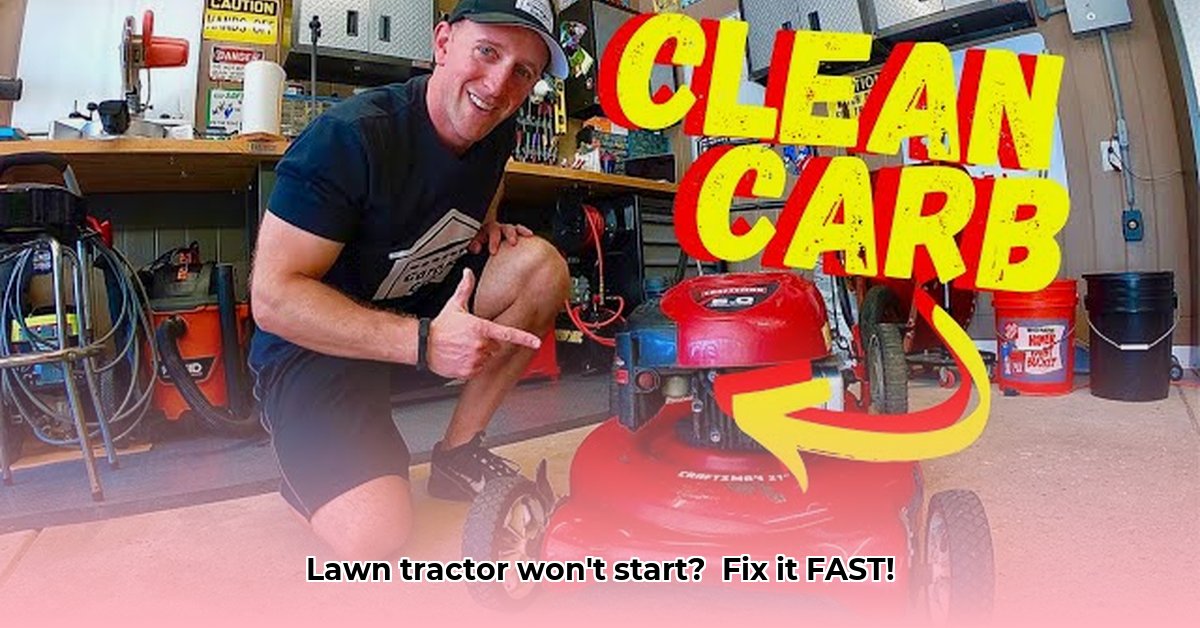
Is your lawn tractor sputtering, refusing to start, or lacking power? A dirty carburetor is a common culprit. This guide provides two methods for cleaning your lawn tractor's carburetor, catering to both beginners and intermediate DIYers. We'll cover a quick in-situ cleaning method for minor clogs and a more thorough removal and cleaning method for severe issues. Need a new battery? Check out battery options for your tractor. Let's get your mower back in action!
Safety First!
Before you begin, prioritize safety. Gasoline is flammable, so work in a well-ventilated area, far from open flames or sparks. Always wear safety glasses to protect your eyes from debris and gloves to keep your hands clean. Crucially, disconnect the spark plug before performing any work on the engine to prevent accidental starting.
Method 1: In-Situ Cleaning (For Minor Clogs)
This method is ideal for minor clogs and allows you to clean the carburetor without removing it from your tractor. It's a quick fix, saving you time and effort.
Locate the Carburetor: Consult your owner's manual to identify your tractor's carburetor. It's usually near the engine.
Gather Supplies: You'll need carburetor cleaner (a spray can), compressed air (like a computer duster), and clean rags.
Spray and Blow: Carefully spray carburetor cleaner into the carburetor's jets (the tiny holes). Let it sit for a few minutes to dissolve any deposits. Then, use compressed air to gently blow out loosened debris. Avoid excessive force to prevent damage.
Inspect and Repeat: Check the jets' spray pattern. If blockages remain, repeat steps 3 and 4.
Test: Reconnect the spark plug, and start your engine. If it runs smoothly, you’re done! Otherwise, proceed to Method 2.
Pros: Quick, easy, minimal tools required. Cons: Ineffective for severe clogs; limited access to all carburetor parts.
Method 2: Full Carburetor Removal and Cleaning (For Severe Clogs)
If Method 1 fails or you suspect severe clogging, removing and fully cleaning the carburetor is necessary. This method offers a thorough clean but requires more time and mechanical skill.
Disconnect Components: Disconnect the fuel line (a fuel line disconnect tool is highly recommended), air filter, and any intake hoses attached to the carburetor. Take photos or draw a diagram to aid reassembly.
Remove the Carburetor: Carefully remove the carburetor from the engine. This typically involves unscrewing bolts or fasteners. Again, document the process visually.
Disassemble: Gently disassemble the carburetor, separating its components. Keep all parts organized and in labelled containers to prevent misplacement.
Clean Thoroughly: Use carburetor cleaner, a small brush (non-metallic), and compressed air to clean every part meticulously. Pay close attention to the jets and passages.
Reassemble: Carefully reassemble the carburetor, referencing your pictures or diagrams. Ensure all parts are correctly positioned.
Reinstall and Reconnect: Reinstall the carburetor, reconnect all hoses and components, and double-check your work.
Test the Engine: Reconnect the spark plug and start the engine. If the problem persists after this thorough cleaning, consult a small engine repair professional.
Pros: Thorough cleaning, allows for complete inspection of all carburetor parts. Cons: Time-consuming, requires more mechanical skill and tools, higher risk of damage if improperly assembled.
Troubleshooting and Next Steps
If your engine still malfunctions after cleaning the carburetor, investigate other potential causes, such as a clogged fuel filter, faulty spark plug, or a problematic air filter. If the issue persists, consider seeking professional help.
Essential Tools and Supplies
- Carburetor Cleaner
- Compressed Air
- Small Wire Brush (non-metallic)
- Screwdrivers (Phillips and flathead)
- Fuel Line Disconnect Tool (recommended)
- Wrenches (sizes vary depending on your tractor model)
- Rags
- Safety Glasses and Gloves
- Container for Small Parts
- Camera or Smartphone (for documenting disassembly)
Conclusion: Choosing the Right Method
The best cleaning method depends on the severity of the clog and your comfort level with mechanical tasks. For minor issues, in-situ cleaning offers a fast solution. Severe clogs necessitate full carburetor removal for a thorough and effective clean. Remember, regular maintenance, including periodic carburetor cleaning, will keep your lawn tractor running smoothly for years to come.